Archive for the ‘reading’ Category

I have a new-found love of historical fiction.  This book, set in mid 19th-century China, so brilliantly wove together elements of fictional relationships with real Chinese traditions and attitudes.  Through the lens of Lily, the book’s narrator and main character, we get a glimpse of what life was like for women living in China 150 years ago:  the pain and risk associated with footbinding, the rituals and duties of betrothal and marriage, and the never-ending list of  restrictions and expectations.  Totally fascinating, though completely tragic as you realize how heavily women were disrespected, devalued, and oppressed.

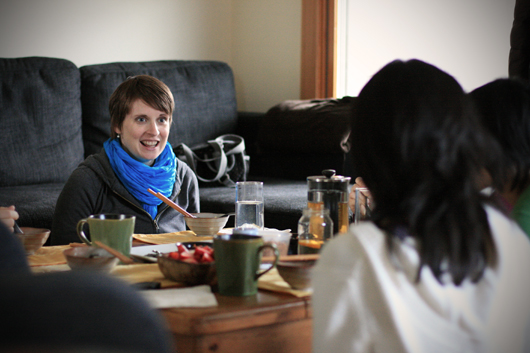
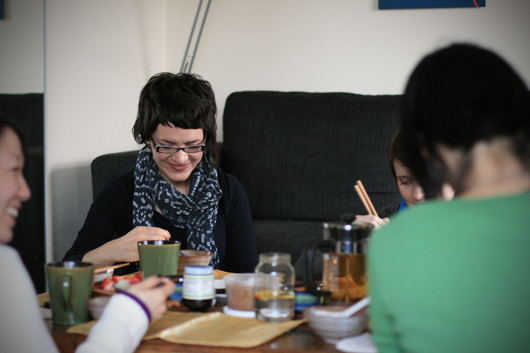
I loved getting together with my book club this morning and hearing everyone’s impressions of the book.  As we all sat around the table and enjoyed Congee (courtesy of Emily), I was incredibly grateful for the diversity of thoughts, cultures, and experiences present in that room.  We shared about how our familial and cultural roots have impacted our ability to express ourselves, how we still see women enduring pain and discomfort in the eternal pursuit of ‘true beauty’, and how difficult it would be to have to inflict pain on your child in the name of tradition.  Deep stuff.  Yet these moments of thoughtful reflection were intertwined with personal stories and loud bouts of laughter.  Two and a half hours has never flown by so quickly.  I have been so blessed by this group of ladies – I like to think of them as my own version of the Chinese ‘sworn sisterhood’…

My parents gave this book to me for Christmas when I was just a kid – I believe it’s been sitting on my bookshelf for over 15 years, neglected and unread.  I’ve seen the movie over twenty times and count it as one of my favorites, but somehow just never got around to picking up the book.  After reading the first Twilight novel, I was in the mood for something more… ‘wholesome’ and challenging, and December seemed like the right month to take on Little Women, in all its classic, family-centered goodness.  And I’m so glad that I did.  I just finished this book by the light of our Christmas tree, and wouldn’t have wanted it any other way.  It’s not a page-turner, and there were a few overly verbacious (is that a word?) chapters that were difficult to get through, but all in all, I really enjoyed this book and felt like the holiday season was the perfect time to read it.  I loved being transported into the March family’s living room, sensing the warmth of sisterly love and motherly care.  And while Marmee’s infinite wisdom and the girls’ fixation on morality may have seemed a bit much at times, I think that’s ok – sometimes the family unit needs to ‘idealized’ a little bit, considering the sad examples of crumbling families that we’re currently bombarded with in the modern media.  And so this book gets two thumbs up, with a bonus point for the fact that Louisa May Alcott seemed like quite an exceptional woman.

This book may be one of the best memoirs I’ve ever read.  The style of writing, the point of view, and the vivid details put me right in the room with the author as he was living out his childhood in his dilapidated little home in Limerick, Ireland.  Loved it.  His story is definitely a sad one – extreme poverty, an alcoholic and absent father, the death of three siblings – but he doesn’t seem to feel the least bit sorry for himself.  He accepts the life he’s been given and when he’s old enough to change it, he takes a tremendous step to do so.

Even more enjoyable than reading this book was getting together with my girlfriends to discuss it at our monthly book club meeting yesterday.  I love these ladies – though we only spend minutes actually discussing the book, we spend hours at our special table at the bakery, chatting and laughing and catching up with one another.  This little gathering has become something that I look forward to all month long, whether I like what we’re reading or not.  Next on the list?  Well…according to our rotation of easy page-turners, memoirs, and classics, we should be reading Uncle Tom’s Cabin this month.  But it seems most of us just weren’t up to the challenge right now, so it’s ‘choose your own adventure’ month.  And it turns out that I was the only one at the table yesterday who hasn’t read Twilight yet, so for the sake of inclusiveness, I’m putting aside my presuppositions and giving into the hype.  Bring on the vampires…

I didn’t quite know what I was getting into when I picked up this book, and I raised my eyebrows when I discovered it was all about vampires and the legend of Dracula, but I’m glad I stuck through it.  Turned out to be a totally enthralling mystery/suspense/thriller, laced with romance and lots of lovely imagery of Eastern Europe.  The descriptions of Budapest have placed Hungary near the top of my ‘places to see’ list, with a quick pop over to Istanbul to check out the Hagia Sophia and wander the street markets.  This novel was rich with historical lessons, too, about the Ottoman Empire, the fall of Constantinople and the major figures of power that ruled in Eastern Europe in the 1400′s.  I had no idea that Stoker’s Dracula was inspired by a real person, and was surprised to find that the horrific crimes committed by Vlad Tepes, as listed in this book, seem to be true.  Dark, interesting stuff.  My book club rates our reads on a 5-star scale, and I’m giving this one a solid 4.  Well worth all 675 pages.

This book was a perfect summertime read – a good mystery/drama/love story kind of a page-turner.  It’s the story of a young Amish woman in rural Pennsylvania who is put on trial for murder.  Kind of mindless, but in a way I appreciated – it had been awhile since I picked up one of those books that you can sit down with and blow through 50 pages at a time.  And this glimpse into Amish life was fascinating – though fictional, it seems from my small amount of Internet research that the author was pretty true to Amish standards and traditions.  Their commitment and strict adherence to centuries-old traditions is both admirable and hard to imagine.  Are there seriously still people in this country who choose to live life without automobiles or telephones?  Mind-boggling.  So, this book gets one solid thumb up – it doesn’t quite warrant a second thumb, but it was certainly one of those ‘fun’ kind of reads.

This is the author’s true story of his experiences in war-ravaged Sierra Leone, where he flees at the age of twelve from rebel fighters and is soon after recruited to fight as a soldier for the cruel and corrupt government army.  The violence he is part of as a young adolescent is horrifying – he is brainwashed into becoming little more than a killing machine, with a thirst for blood and a total lack of compassion for fellow human beings.  Parts of the book caused me to cringe, to have to close it for a moment to recompose myself.  And although there is redemption and hope in Beah’s eventual rescue and rehabilitation, what sickens me is that this is a true story.  Boys as young as eight or nine years old were drugged with cocaine, handed machine guns, and convinced that their self-worth was found in how many people they could kill in a day’s time.  I was so ignorantly unaware that this country had suffered such violent conflict for so many years.  So yes, this was a worthwhile read.  Inform yourself.

This book came highly recommended by Shane, and I was looking forward to getting into a real page-turner.  It is the true story of the building of the Chicago World’s Fair of 1893, intertwined with the story of a serial killer who used the fair as a lure for many of his victims.  Intriguing…  But the book was often overly factual, so ridden with real-life accounts that I had a hard time really getting into the story.  It was all very interesting, but I’ve mentioned before that I like to really connect with a book’s characters and get lost in the story, and I had a hard time doing that in the midst of so many details and dates.  Nonetheless, it was a good read – I can appreciate the feat that was undertaken by the architects who were given just a couple of years to design and construct this miniature city inside of Chicago.  And knowing that the things you’re reading about truly did happen certainly elevates the intensity of events, so I guess I’m torn.  Fict or fact?

East of Eden was our April book club pick – after a couple of relatively quick, fun, “modern” novels, we felt we were due for something with a bit more depth and literary merit (whatever that means).  Yes, the length of this book was daunting, and yes, there were times when I felt I had to trudge through Steinbeck’s detailed descriptions of the Salinas Valley, but there were also times when I found myself becoming completely absorbed in the lives of the characters and their constant battles between good and evil.  By the time I got to the end of the book, I really felt like I’d been on a journey with a couple of the main characters – like I’d come alongside them in their joys and struggles.  This feeling of investment is the sign of a good book to me, and so I’m giving this one 4 stars out of 5.  And it’s nice to finish a novel with a real sense of accomplishment, with the belief that I am now a more well-rounded reader.  I just wish I fully understood all of the parallels between East of Eden and the book of Genesis – where is my high school English teacher when I need him?  Mr. Huth, if you’re out there, some of this was over my head…

We had our second book club meeting last Saturday, and our February reading assignment was The Glass Castle.  This collection of the author’s memoirs tells of a life that was marked by poverty and parental neglect.  Heart-breaking, painful, and infuriating when parents refuse to play the role of parents.  Makes me appreciate my relatively normal childhood.  Stability was always something I took for granted – I never thought to be thankful for the fact that my dad never lit the Christmas tree on fire, my mom never relied on me to get her out of bed and to work in the morning, and I never had to fret over where or when I would find my next meal. Passages like this one made me cringe:

“Once, when an extra-big royalty check came in, Mom bought us a whole canned ham.  We ate off it for days, cutting thick slices for sandwiches.  Since we had no refrigerator, we left the ham on a kitchen shelf.  After it had been there for about a week, I went to saw myself a slab at dinnertime and found it crawling with little white worms.  Mom was sitting on the sofa bed, eating the piece she’d cut.  ‘Mom, that ham’s full of maggots,’ I said.  ‘Don’t be so picky,’ she told me.  ‘Just slice off the maggoty parts.  The inside’s fine.’ ”

But hope is found in the fact that despite the struggle of living in poverty with an alcoholic father and a self-absorbed mother, the author and her siblings band together to overcome the tragedy of their circumstances.  Walls’ life seems to be a true tribute to resilience and self-empowerment.

This book tells the amazing true-life story of Greg Mortenson – a man who has devoted his life to promoting peace in Pakistan and Afghanistan primarily through building schools and educating children.  His story is both both inspiring and daunting.  Inspiring because it demonstrates the change that one selfless man can inflict.  Daunting because it demonstrates the change that one selfless man can inflict. So much for using “I’m only one person” as an excuse for sitting on my butt…  When you are willing to set aside your wants and needs and personal comfort, you are freed to focus on the lives of others, to empower them and bless them and make their lives better.

I love Mortenson’s attitude toward the fight against terrorism – it’s not about scare tactics, or weaponry, or implementation of American culture and systems.  It’s about providing the often-desperate impoverished people in these rural areas of Pakistan with an alternative to the existing Muslim schools which often exclude girls and indoctrinate young boys with extremist beliefs.  It’s about respecting other cultures, empowering them with the knowledge of a well-rounded education, trading our arrogance for humility.  So much easier said than done, I understand, but isn’t it clear that the U.S. government’s current approach has not worked?  Time to try something else, maybe?

Read this book.